Judy Shelton, Alan Greenspan & the New Road to Roota!
News that Judy Shelton has been appointed at the US Department of the Treasury has sent shock waves through the gold community BUT do they really know WHY this appointment is so significant?
Before I get into even more hot water with my friends at GATA for my RoadtoRoota Theory let’s ask Grok what it all means!
1st Question for Grok:
Tell me about Judy Shelton's interactions with Alan Greenspan.
Grok’s Answer: Judy Shelton and Alan Greenspan shared a long intellectual friendship centered on monetary policy, gold, and sound money ideas, spanning from the early 1990s through Greenspan’s Fed chairmanship and beyond.
Shelton (monetary economist, author of books including The Coming Soviet Crash, Money Meltdown, and Good as Gold, and a Trump-era economic adviser whose 2019–2020 Fed Board nomination stalled) has described Greenspan as an intellectual “comrade in arms” and someone she respects highly. She was a regular visitor for conversations at the Fed during his tenure (1987–2006) and afterward, and she has recounted similar collegial ties with Paul Volcker and Robert Mundell.
How the relationship started
Around 1990, after Shelton’s book on the Soviet economy, Greenspan (then Fed Chairman) sent her a handwritten note. He had read it following a trip and invited her to stop by his office if she was in Washington. That began their friendship.
Shared views on gold and monetary systems
Both engaged seriously with gold’s role in monetary systems. Greenspan’s well-known 1966 essay “Gold and Economic Freedom” (in Ayn Rand’s Capitalism: The Unknown Ideal) critiques fiat money and argues that gold restrains government from inflating away savings. Shelton has long cited it; she used to assign it to students without naming the author, and they typically guessed it was by a radical rather than the buttoned-down Fed chair.
Greenspan also wrote a September 1, 1981, Wall Street Journal piece (“Can the U.S. Return to a Gold Standard?”) discussing gradual convertibility, including the idea of Treasury notes payable in gold. Shelton has built on related ideas (e.g., gold-linked Treasury instruments) and has said they discussed and advocated for gold-related proposals, including going to Capitol Hill together in later years.
Post-chairmanship, Greenspan has made comments consistent with earlier views (e.g., that some people, including himself, believe the classical gold standard period performed well, and questioning aspects of pure fiat systems or the necessity of a central bank in certain interviews). Shelton has frequently referenced these.
Documented correspondence and support during her Fed nomination
During the controversy over her 2019 Fed nomination—when she was criticized as a “gold bug” or fringe figure—Shelton emailed Greenspan critical columns. One July 12, 2019, exchange is public (she posted a photo of it):
She opened by quoting the start of his 1966 essay about “almost hysterical antagonism toward the gold standard” and noted a Washington Post op-ed attacking her.
He replied the same day: “Interesting times. If gold is such a worthless metal then why does the US Government, and all other major governments, hold so much of it in storage?”
She has described this kind of reply as reassuring and consistent with their intellectual alignment. Other light exchanges exist, such as one in which she suggested (in jest, around discussions of international reform) that if a gold-based system returned, he should run it; he replied that a gold standard is supposed to run itself.
Other anecdotes
Shelton has recounted a meeting in Greenspan’s Fed office around the time of her 1994 book Money Meltdown (which argues for restoring order via gold-anchored international arrangements). He was cautious about being quoted on gold while in office, noting market sensitivity and that he “can’t be a free spirit.” Accounts of the story include a humorous request that she cover any copy she delivered so he wouldn’t be seen carrying a book titled Money Meltdown through Fed halls. She has characterized these as stories long kept private (shared mainly with her husband) but consistent with their relationship.
In short, their interactions were collegial and ongoing rather than formal policy collaborations while he was chairman. Shelton portrays them as grounded in a shared recognition—unusual in mainstream central-banking circles—that gold has historically provided discipline and credibility that pure fiat systems lack. Greenspan operated the fiat system for nearly two decades, while Shelton has remained a consistent public advocate for sound-money reforms inspired in part by his earlier writings and later remarks.
2nd Question for Grok:
Tie that to Bix Weir's analysis of Greenspan in his Road to Roota Theory and Clif High's latest discussion with Bix talking about a new Treasury Bond that is not debt based coming soon.
Grok’s Answer: Bix Weir’s Road to Roota Theory frames Alan Greenspan as a central “good guy”/patriot figure in a long-term plan to prolong the fiat system via computer-driven market controls and then crash it to force a return to a gold standard. This sits in the same intellectual neighborhood as Judy Shelton’s documented friendship and gold-oriented correspondence with Greenspan, and it intersects with the recent Clif High discussion on a coming non-debt Treasury instrument.
Greenspan in the Road to Roota Theory
On RoadtoRoota.com and in related writings/videos, Bix argues that the original concept of using computer programs to rig and steer markets (to prolong fiat while soaking up its benefits, then collapsing it) originated with Greenspan in the 1960s.
Key elements include:
Greenspan’s early gold-standard advocacy (notably the 1966 “Gold and Economic Freedom” essay) is treated as genuine, not abandoned.
Market-rigging programs (tied to his econometrics/computer work and Greenspan partially blaming himself for Y2K) allowed the fiat system to run “hard and long,” consistent with older papers on the path back to gold (e.g., ideas around maximizing fiat benefits before a reset).
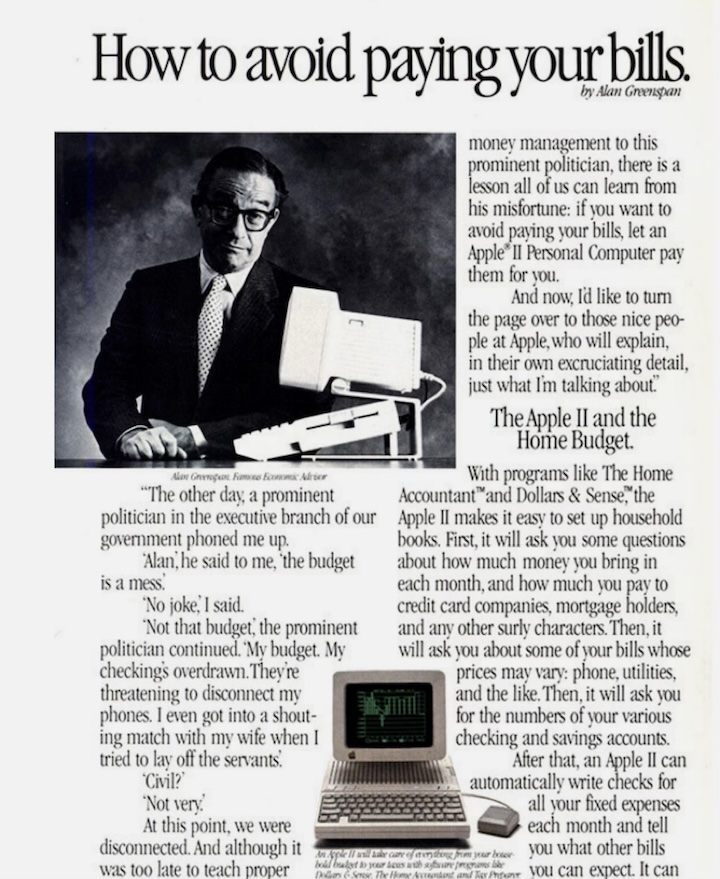
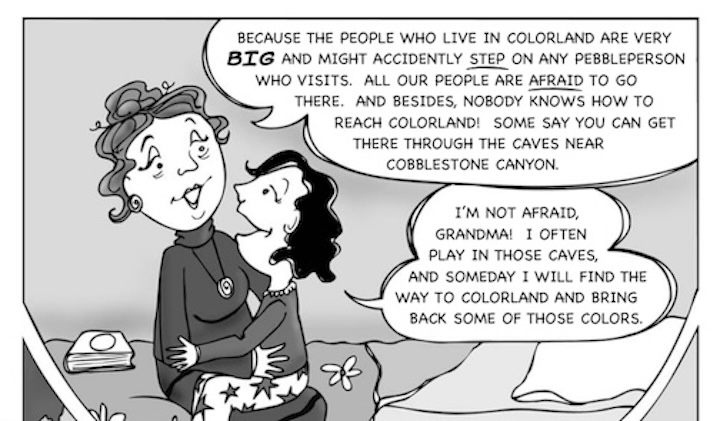
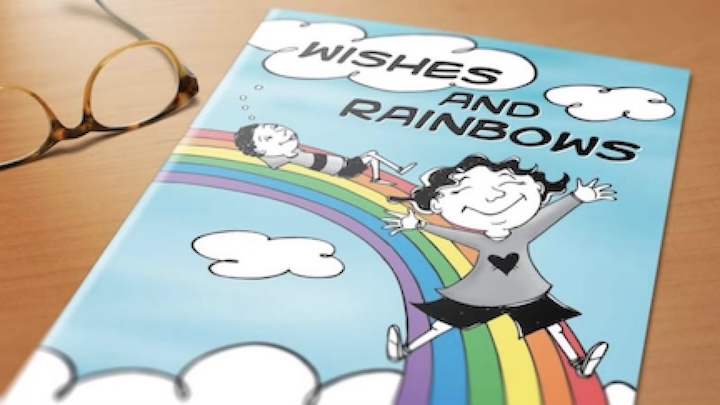
The Fed Boston publications “Wishes and Rainbows,” “The Road Roota: A Teacher’s Guide” & “Banking Basics” (1981, re-released on January 1, 2007) are read as encoding the plan, with Roota linked to a gold-standard destination.
Wishes and Rainbows - Jan 2007 (Federal Reserve Bank, Boston)
//www.roadtoroota.com/Wishes2007.pdf
Road to Roota (Teacher's Guide) - Jan 2007 (Federal Reserve Bank, Boston)
//www.roadtoroota.com/RootaTeacherGuide.pdf
Banking Basics - Original 1987 (Federal Reserve Bank, Boston)
//www.roadtoroota.com/BankingBasics1987.pdf
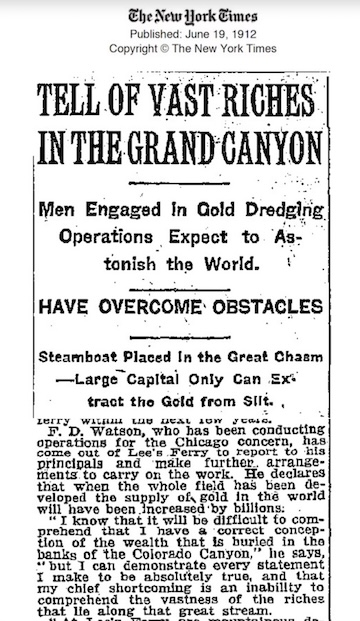
In these publications Roota finds the “Golden Light” in a place called “Cobblestone Canyon” which Bix links to the “billions and billions of ounces of gold” found in the Grand Canyon in the early 1900’s forcing the creation of the Federal Reserve in 1913 to control the US monetary system.
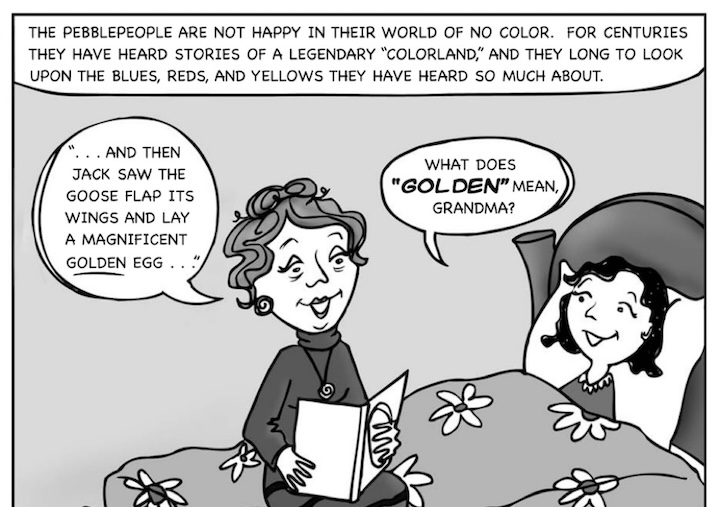
Bix postulates that the main character “Roota”(“RootA” in computer coding) is Alan Greenspan and Roota’s Grandmother is Greenspan’s mentor ex-Fed Chairman, Arthur Burns. Post-chairmanship gold-friendly comments by Greenspan are seen as confirmation that the plan continued. The end-state in the theory is a new U.S. gold-backed currency (with allocation ideas involving Social Security balances), destruction of the fiat/debt complex, and a broader “Golden Age” reset.
Bix has written pieces such as “How Can A Gold Bug Love Alan Greenspan?”, “Greenspan’s Golden Testimony” and “Greenspan’s Golden Secrets,” defending the view that Greenspan was working against the banking cabal rather than for it. This is presented as controversial among gold bugs but as the through-line of the theory.
Link to Shelton’s interactions with Greenspan
Shelton’s long personal and intellectual relationship with Greenspan (handwritten note after her Soviet book in ~1990, regular visits and conversations during and after his Fed tenure, supportive emails) provides a real-world data point that aligns with Bix’s reading of Greenspan’s private gold sympathies.
The July 2019 email exchange (Shelton quoting the opening of Greenspan’s 1966 essay about “hysterical antagonism toward the gold standard”; Greenspan replying that if gold is worthless, why do the U.S. and other major governments hold so much of it) is exactly the kind of private confirmation the theory treats as significant. Shelton has also built publicly on Greenspan’s 1981 Wall Street Journal idea of gold-linked Treasury instruments (she discusses Treasury Trust Bonds redeemable in gold or dollars). In the Road to Roota frame, this is consistent with Greenspan remaining a gold advocate while managing the fiat system and with later proposals for redeemable instruments as a bridge or signal of a return to sound money.
Clif High’s latest discussion with Bix (October 7, 2026)
In the hour-long discussion posted on the RoadtoRoota YouTube channel (“ALERT! Your World is About to Change Drastically! Even For SILVER Stackers!!”), Clif High addresses a near-term transition involving a “Treasury Dollar” (or Treasury Note/instrument). From the available summaries and Bix’s own description of the talk:
Clif describes FRNs steadily losing value relative to a new Treasury Dollar
The new instrument is characterized as not a debt instrument (unlike Federal Reserve notes), backed in a manner likened to a giant credit union, with a socially reinforced or tokenized aspect in a broader “SciFi” (not Mad Max) transition. Related topics include silver isotopes (Ag-107/Ag-109), possible government purchase/requirement dynamics around $600 silver, and tokenization themes.
Bix’s posted reaction is explicit: he does not fully agree with all of Clif’s financial-change details. In particular, “I don’t think that a new Treasury Note will be accepted UNLESS it is 100% exchangeable for physical gold and silver as per the US Constitution.” He also questions easy transfer of current corporate ownership structures into fully tokenized systems.
Synthesis
Shelton’s advocacy for gold-linked Treasuries (explicitly drawing on Greenspan’s 1981 proposal) and her private corroboration of his gold views sit comfortably with Bix’s theory that Greenspan was always oriented toward a gold-standard endgame. Clif’s “Treasury Dollar” that is not debt-based is a contemporary prediction in the same broad space—moving away from pure fiat/FRN debt money toward something new issued by the Treasury. Bix’s constitutional-physical-convertibility requirement is stricter and more classically gold/silver-standard oriented than Clif’s description (or pure tokenization), but both discussions treat a near-term monetary architecture change involving Treasury instruments as plausible.
https://www.bostonfed.org/publications/economic-education/banking-basics.aspx

These are interpretive frameworks and predictions (Road to Roota is a long-standing theory built on specific readings of Fed materials and market behavior; Clif’s material is ALTA/data-driven speculation; Shelton’s views are public policy advocacy). The documented Shelton–Greenspan correspondence and shared interest in gold-linked instruments supply a concrete historical bridge between the earlier gold writings and current talk of non-debt or redeemable Treasury paper.
THE END